
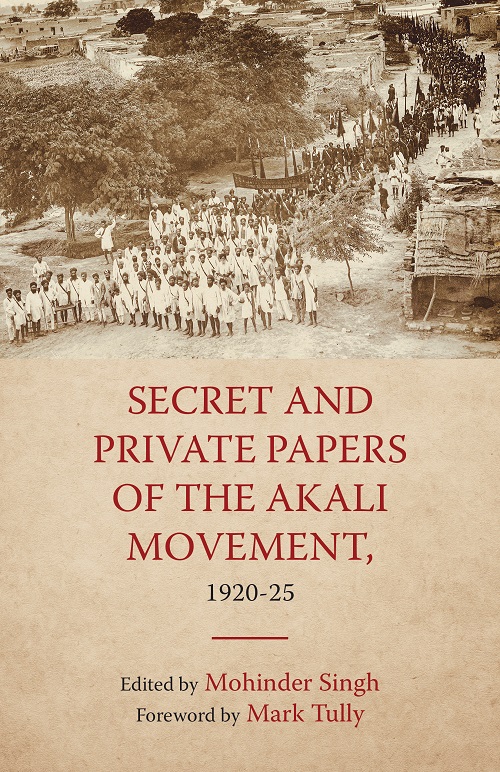
A collection of rare and revealing archival material on a defining protest movement of modern Punjab that affects Sikh society and politics to this day.
Between 1920 and 1925, tens of thousands of Sikhs across undivided Punjab—among them, religious leaders, farmers and soldiers—came together in an agitation to free Sikh shrines from corrupt and tyrannical mahants—or priests—who managed them. These mahants belonged to sects that traditional Sikhs considered heretical, and were powerful because first the Mughal and then the British administration had supported them. Despite repression, arrests and violence by the British Indian government and the private armies of the mahants, the protest—which came to be known as the Akali Movement, and the Gurudwara Reform Movement—succeeded, and control of the shrines came to representative religious bodies of the Sikhs. This was India’s first successful non-violent mass protest, or Satyagraha, and became an inspiration for the freedom movement.
In this book, the acclaimed scholar of Sikh history, Mohinder Singh, collects rare correspondence among different departments of the British administration and between the British and the Akali leaders, which had remained classified for decades. Comprising these papers that few have ever seen, and an illuminating introduction by Mohinder Singh, this book sheds important light on the Akali Movement, the modern history of Punjab and Sikh politics.