How can a society reform itself without repudiating its past? How can it learn from other civilisations without accepting their judgement of its inferiority? And how can tradition remain a source of moral authority without becoming an obstacle to change?
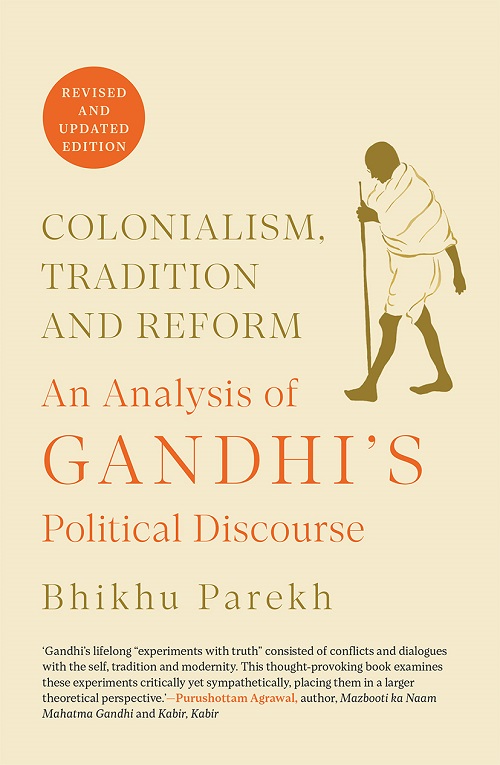
These questions lie at the heart of Bhikhu Parekh’s landmark study of Gandhi’s political discourse. Colonialism, Parekh argues, did more than impose foreign rule on India. It unsettled the country’s sense of itself, forced Indians to defend their beliefs and practices in categories defined by their rulers, and profoundly altered the terms on which tradition could be understood, let alone questioned and renewed.
Gandhi’s response was neither orthodox nor fully modernist. Seeking a new yugadharma for a new India, he drew upon the resources of Hindu tradition while opening them to moral insights from other religions and intellectual traditions. He was at once a radical reformer and a figure deeply marked by the limits of the society he sought to transform.
With rare intellectual sympathy, Parekh examines Gandhi’s reworking of ahimsa; his dialogue with the revolutionaries; his campaign against untouchability; his controversial experiments in celibacy; his distinctively Indian remaking of autobiography; and the tensions within his economic and political worldview. The book culminates in a searching meditation on the crisis of religion in the modern world and the changes it must undergo if it is to retain a place in public life.
Neither hagiography nor refutation, Colonialism, Tradition and Reform remains one of the most incisive studies of Gandhi’s originality, achievements, contradictions and failures. At a time when questions of religious identity, social reform, cultural self-confidence and political morality have acquired renewed force, this book remains indispensable for any student of India.