‘An excellent illustration of how Nehru conducted India’s quest for international standing.’—Survival, Journal of the International Institute for Strategic Studies
‘… absolutely a book for our times. Benvenuti takes the reader beyond traditional patterns of Cold War historiography … This is a really important and scholarly account of complicated and constantly shifting regional politics.’—Anne Deighton, University of Oxford
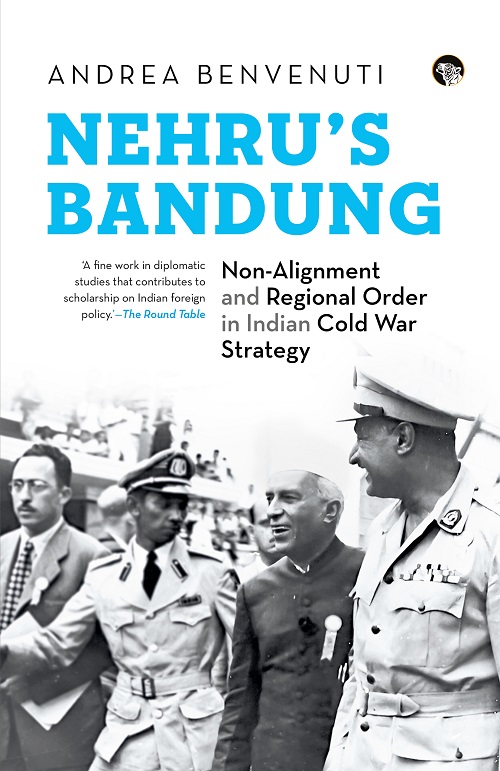
This book sheds light on a neglected aspect of India’s Cold War diplomacy, starting with the role of Prime Minister Jawaharlal Nehru in organising the first Asian-African Conference in Bandung in April 1955. Andrea Benvenuti shows how, in the early Cold War, Nehru seized the opportunity accorded by the conference to transcend growing international tensions and pursue an alternative vision: a neutral Asian ‘area of peace’, underpinned by a code of conduct based on the five principles of peaceful coexistence (Panchsheel). Relying on Indian, Western and Chinese archival sources, Nehru’s Bandung focuses on the policy concerns and calculations, as well as the international factors, that drove a sceptical Nehru to support Indonesia’s diplomatic push for such a gathering. It reveals how, in Nehru’s estimation, Bandung could also serve a further important purpose—securing China’s commitment to peaceful coexistence, without which stability in Asia would be illusory. It was a grand vision that soared briefly, before China’s single-minded pursuit of national interest would bring it down.
This is an essential book for anyone interested in Independent India’s foreign policy, the history of the Non-Aligned Movement, and also the history of India-China relations.