‘The counter-intuitive and hugely consequential story of “in-between” Goans in colonial Africa remains among the great hidden histories of our times…This book, rich with insights and atmospheric details, brings to life the amazing story of these highly motivated “subaltern elites” as they navigated the winds of change in the 19th century.’—Vivek Menezes, writer, columnist and co-founder of the Goa Arts & Literature Festival
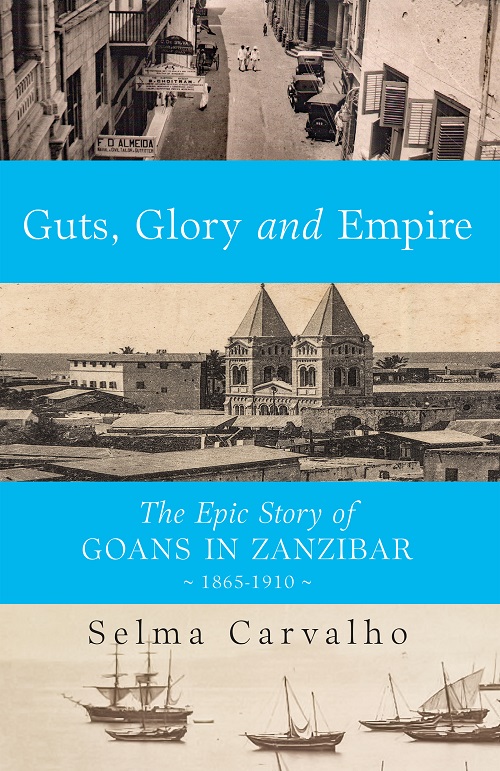
Zanzibar, situated off the coast of East Africa, was for long a junction for monsoon-driven sea routes connecting Africa, Europe and Asia. By the mid-nineteenth century, it had risen to prominence as a busy, cosmopolitan trading post for cloves, ivory and, unfortunately, slaves. It became a beacon for missionaries, explorers, merchants, and a theatre of Europe’s imperial ambitions. It was at this time that Goans, who had long been travellers and traders to the East African coast, began settling in Zanzibar, flourishing under Sultan Barghash bin Said’s reign.
Among the early arrivals were C. R. Souza, D. B. Pereira and Brás Souza, who would all go on to become influential figures—ambitious, benevolent, but ultimately flawed characters. Their engagement with a host of lively personalities, including British arch-imperialists John Kirk and Gerald Portal, set in motion a compelling challenge of empire’s authority over ordinary lives. Mistaken as ‘half-caste Portuguese’, they were at times favoured by Britain as law-abiding and industrious, and at other times dismissed as natives needing supervision, even as they began to assert tremendous agency over their own individual lives, gaining influence as physicians, musicians and interpreters to the sultan. Aware of their rights as Portuguese citizens, and making intelligent use of the privilege and protection extended to them by the sultanate, they pushed back against Britain’s erosion of their civil liberties.
In Guts, Glory and Empire, a compelling and unprecedented work of history set against the backdrop of Europe’s ascendancy in Africa, Selma Carvalho brings us the story of this remarkable community, and restores South Asian voices to Indian Ocean histories.