‘[A] searing, compassionate and deeply informed call to reclaim health care as a fundamental human right, not a market privilege. Mander weaves lived experience, moral clarity and rigorous analysis into a blueprint for a more just, caring world.’—Vikram Patel, columnist, and Professor, Global Health and Social Medicine, Harvard Medical School
‘[A] must read. It weaves ethical concerns and centres human rights within health systems in a very persuasive manner, intertwining experiences of India and other countries, alongside solid evidence Such a discourse is much needed as the world over, the state seems to be withdrawing from healthcare[.]’—Sujatha Rao, Former Union Health Secretary
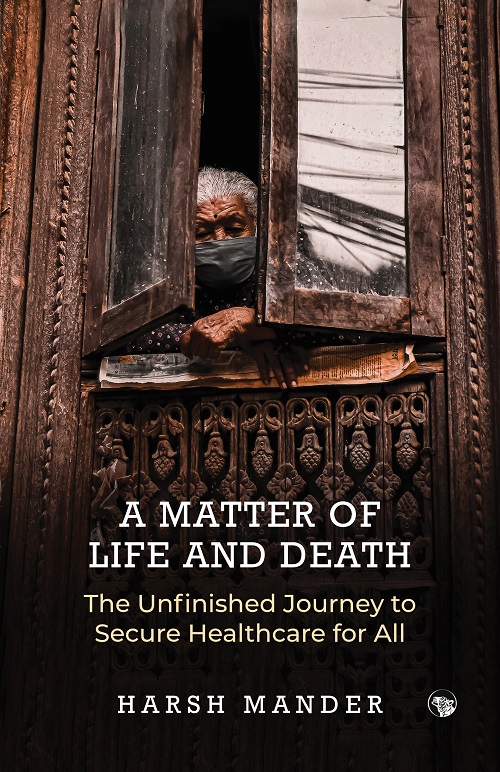
In this book—easily among the most important for India and the world today—the acclaimed social and human rights activist Harsh Mander shows us how active neglect and deliberate anti-poor policies have denied adequate healthcare to over half the world’s population. As he writes, ‘Approximately 4.5 billion people lack full access to essential health services. Two billion face financial hardship Approximately 4.8 million children under 5 died in 2023, mostly from preventable causes. These include neonatal complications, pneumonia, diarrhoea, malaria and malnutrition-related illness. Around 50% of these deaths were preventable with existing low-cost interventions.’
The problem, Mander points out, is not just the absence of healthcare services. A total of 1.4 million people die annually from unsafe water, inadequate sanitation and hygiene, and air pollution. The problem is most acute in developing economies—in India, for instance, over 2 million people die every year because of malnutrition and morbidity. In today’s world, with its scientific wherewithal and financial resources, almost all these deaths are preventable. The reason they are not, is deep and structured inequality, at the base of which are neo-liberal and discriminatory politics; capture of the world’s resources by big capital; rampant privatization; and the retreat of the upper and middle classes from the larger society in pursuit of affluence.
Having shown us the magnitude of the failure of both policy and conscience, Mander argues for the right to health as a fundamental human right. Universal basic healthcare, he insists, is achievable, and shows not only how it can be enforced legally, but also how it can be funded.