‘Ayodhya was a small, sleepy town in North India which lived more in myth than in reality. Then, one day it rose from its stupor and jolted the whole subcontinent. India has never been the same again. In August 1947, India lay divided between Hindustan and Pakistan under the departing heels of the British. On 6 December 1992, we Indians did the dividing ourselves—between Hindustan, a secular nation, and Hindu-sthaan, a nation for Hindus. Ayodhya became the birthplace of the divide.’
—Sankarshan Thakur, from his synopsis for Prashant Panjiar’s Ayodhya project, 2002
Prashant Panjiar saw much of it happen. He first went to Ayodhya in April 1987 to photograph the Vishwa Hindu Parishad’s Virat Hindu Sammelan, one of the early mobilisations of the Ram Janmabhoomi movement. Five years later he was back on assignment for India Today, following L.K. Advani. His photographs of the Babri Masjid’s domes coming down are the only images of the demolition itself.
His career took him through Bhagalpur, Meerut and Ahmedabad, Punjab and Kashmir, Delhi in 1984 and Gujarat in 2002. For years he photographed what communal violence does in the moment. Only after he went independent in 2001 did he have time to look at what it leaves behind. So in December 2002, on the tenth anniversary of the demolition, he went back to Ayodhya. As it turned out, he kept going back.
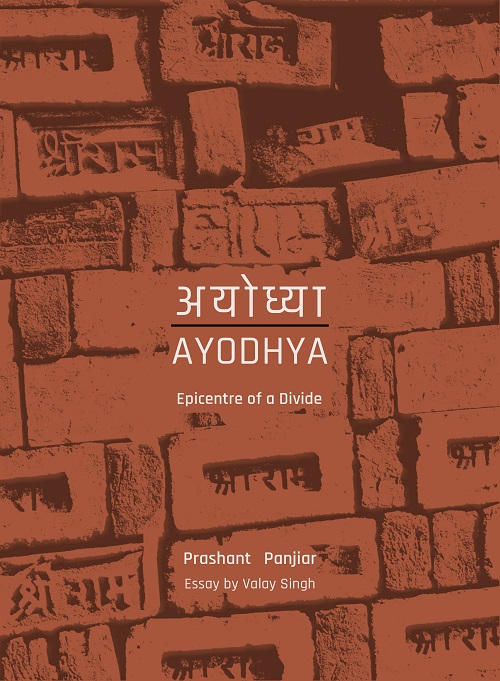
The earliest photographs date from 1987. Most were made between 2002 and 2004, and from 2018 to 2026. Together they cover nearly four decades of Ayodhya: its ghats and akharas, Sufi shrines and Hanuman temples, barricades and barbed wire, and the laser shows and hoardings of the new temple town. With an essay by Valay Singh on how Ram was turned into a political symbol, Ayodhya: Epicentre of a Divide is a rare long view of the town at the centre of modern India’s most consequential fault line, from a photographer who was there when it broke open.