
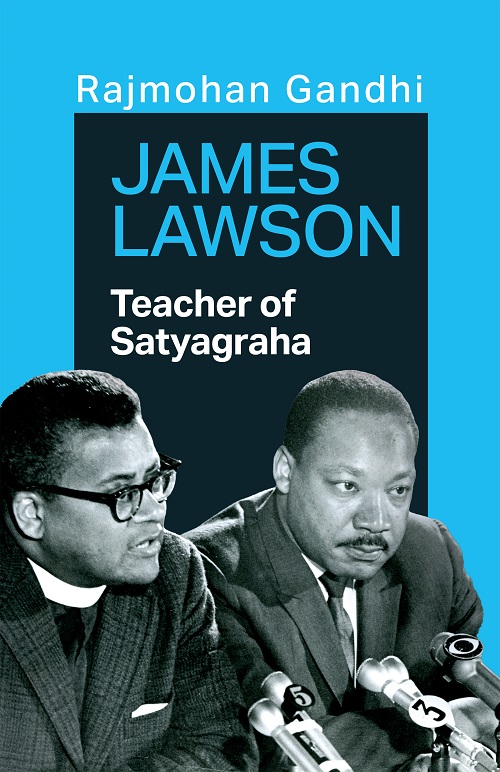
James Lawson (1928-2024) was a key figure in the American Civil Rights Movement who trained a generation of civil rights activists in the Gandhian philosophy and practice of nonviolent resistance. Yet his name rarely makes it into popular retellings of the movement, especially outside the United States. Drawing on conversations late in Lawson’s life, historian Rajmohan Gandhi follows this son of a Methodist pastor from a small Ohio town, Massillon, through college debates, prison time as a conscientious objector during the Korean War, and into the circles of Martin Luther King Jr and Bayard Rustin.
The pages move back and forth between family memories, local archives and Lawson’s own words. A key episode in the story is Lawson’s three-year stay in Nagpur in the 1950s, where, steeped in Gandhi’s ideas and friendships with Indian and African students, he refined the methods of nonviolent direct action he would later teach in Nashville. His workshops there helped shape the famous sit-in campaigns against racial segregation—campaigns that spread across and helped transform the American South.
This is a compelling, affectionate portrait of an extraordinary champion of love and justice, whose life and work have urgent lessons for our world today. It is a story of courage without theatrics, and faith without platitudes, told by the Mahatma’s grandson—a scholar and thinker who came to it from across an ocean.